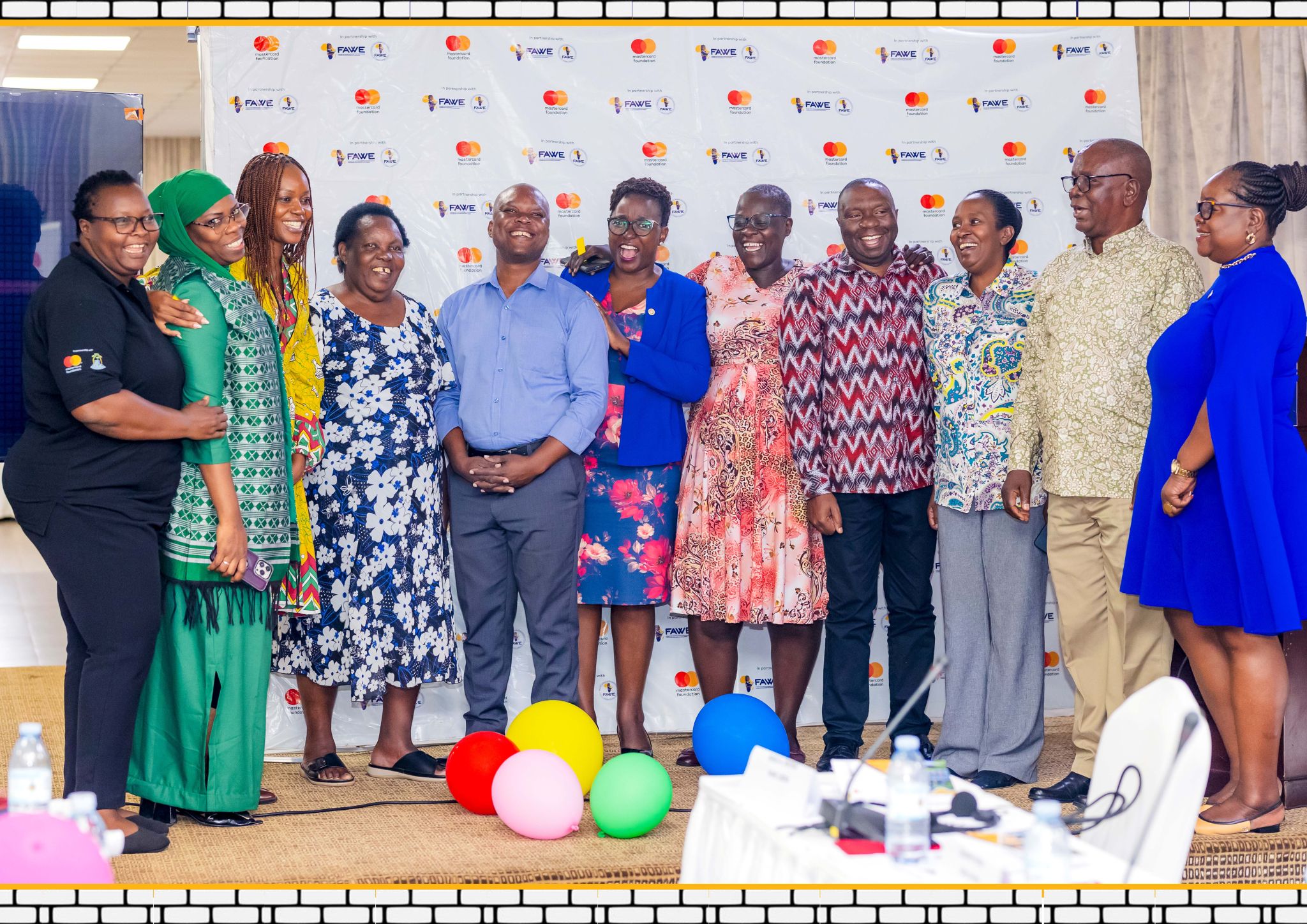
Driving Programme Excellence: FAWEZI Joins Regional Training of Trainers in Uganda to Strengthen Phase II Implementation
The FAWEZI Secretariat joined fellow FAWE National Chapters in Kampala, Kampala, for the FAWE/Mastercard Foundation Phase II Training of Trainers (ToT) on FAWE manuals marking a critical step in strengthening programme quality, alignment, and impact across the continent.
Held from 22–27 February 2026, the convening brought together the Forum for African Women Educationalists (FAWE) Regional Secretariat, implementing national chapters, and learning partner DENSU Associates to review, align, and build capacity on key programme tools guiding Phase II implementation.
At the centre of the training was the revised Extended Orientation Programme (EOP) Toolkit, alongside critical manuals shaping delivery across countries, including:
Safeguarding Mentorship Gender Strategy Alumni Strategy Setting the Tone for Transformational Learning
The training was officially opened by Dr. Martha Muhwezi, Executive Director of FAWE, with welcome remarks from Margaret Winfred Mugeni Atim. Their messages emphasized the importance of continuous learning, institutional strengthening, and standardised programme delivery in achieving meaningful and scalable results.
They underscored that Phase II of the FAWE/Mastercard Foundation Programme presents an opportunity not only to expand reach but to deepen impact through intentional, evidence-based, and gender-transformative approaches.
Strengthening a Shared Vision for Inclusion and Impact
A major focus of the training has been strengthening understanding of the Extended Orientation Programme (EOP) as a strategic entry point for engaging beneficiaries. Participants explored how the EOP can be leveraged to ensure intentional inclusion, meaningful participation, and sustained engagement of girls, particularly those from marginalized and vulnerable backgrounds.
Discussions highlighted the importance of addressing structural and systemic barriers that continue to affect girls’ transitions within and beyond education systems. By aligning on a shared approach, FAWE chapters are better positioned to deliver programmes that are both inclusive and transformative.
Advancing Gender-Transformative Programming
The ToT placed strong emphasis on advancing gender-transformative programming, moving beyond gender-sensitive approaches to actively challenge and change the norms, practices, and structures that perpetuate inequality.
Participants engaged in critical reflections on:
Gender norms and their impact on education outcomes Barriers affecting girls’ progression into higher education and employment Strategies for embedding gender equality across all programme components
This alignment is essential in ensuring that Phase II interventions deliver not only access but equitable and empowering outcomes for girls and young women.
Enhancing Mentorship and Safeguarding Systems
The training also provided practical, hands-on learning in the implementation of mentorship programmes, a cornerstone of the FAWE approach. Participants explored:
Effective mentor recruitment and screening processes Safe and ethical engagement of mentors Peer-to-peer mentorship models that enhance relatability and impact
In parallel, sessions on safeguarding strengthened participants’ understanding of roles, responsibilities, and accountability mechanisms across FAWE structures. Ensuring safe programme environments remains a non-negotiable priority, particularly when working with adolescents and young people.
Towards Standardised and High-Quality Implementation
As the training progresses, participants are actively engaged in validating and refining the programme manuals, ensuring that they are contextually relevant while maintaining consistency across countries.
A key outcome of the convening is the development of country-specific rollout plans, which will guide implementation at national level. These plans are designed to ensure:
Standardised programme delivery High-quality implementation Alignment with regional and global frameworks
This structured approach strengthens accountability and enhances the ability to track progress and measure impact across all participating countries.
Strengthening Regional Collaboration and Learning
Beyond technical capacity building, the ToT has created a valuable platform for peer learning and regional collaboration. FAWE chapters are sharing experiences, challenges, and best practices, fostering a culture of continuous improvement and collective problem-solving.
This South-South collaboration is critical in building resilient education systems that can respond to diverse and evolving challenges across contexts.
Positioning FAWEZI for Impact at Scale
For FAWEZI, participation in the ToT reinforces its commitment to delivering high-quality, data-driven, and impactful programmes under the FAWE/Mastercard Foundation Phase II initiative.
By aligning with regional standards and strengthening internal capacity, FAWEZI is better positioned to:
Scale interventions effectively Deliver consistent and measurable results Contribute to broader continental goals on girls’ education and empowerment A Strong Foundation for Phase II Success
As Phase II implementation gains momentum, the insights, tools, and strategies developed during this training will play a pivotal role in shaping programme delivery across all countries.
The Kampala convening underscores a shared commitment to ensuring that every intervention is intentional, inclusive, and transformative—ultimately contributing to a future where all girls and young women have equitable access to education, opportunities, and the ability to thrive.
Through strengthened systems, aligned strategies, and collaborative action, FAWEZI and its partners are laying a solid foundation for sustained impact at scale.
Menard