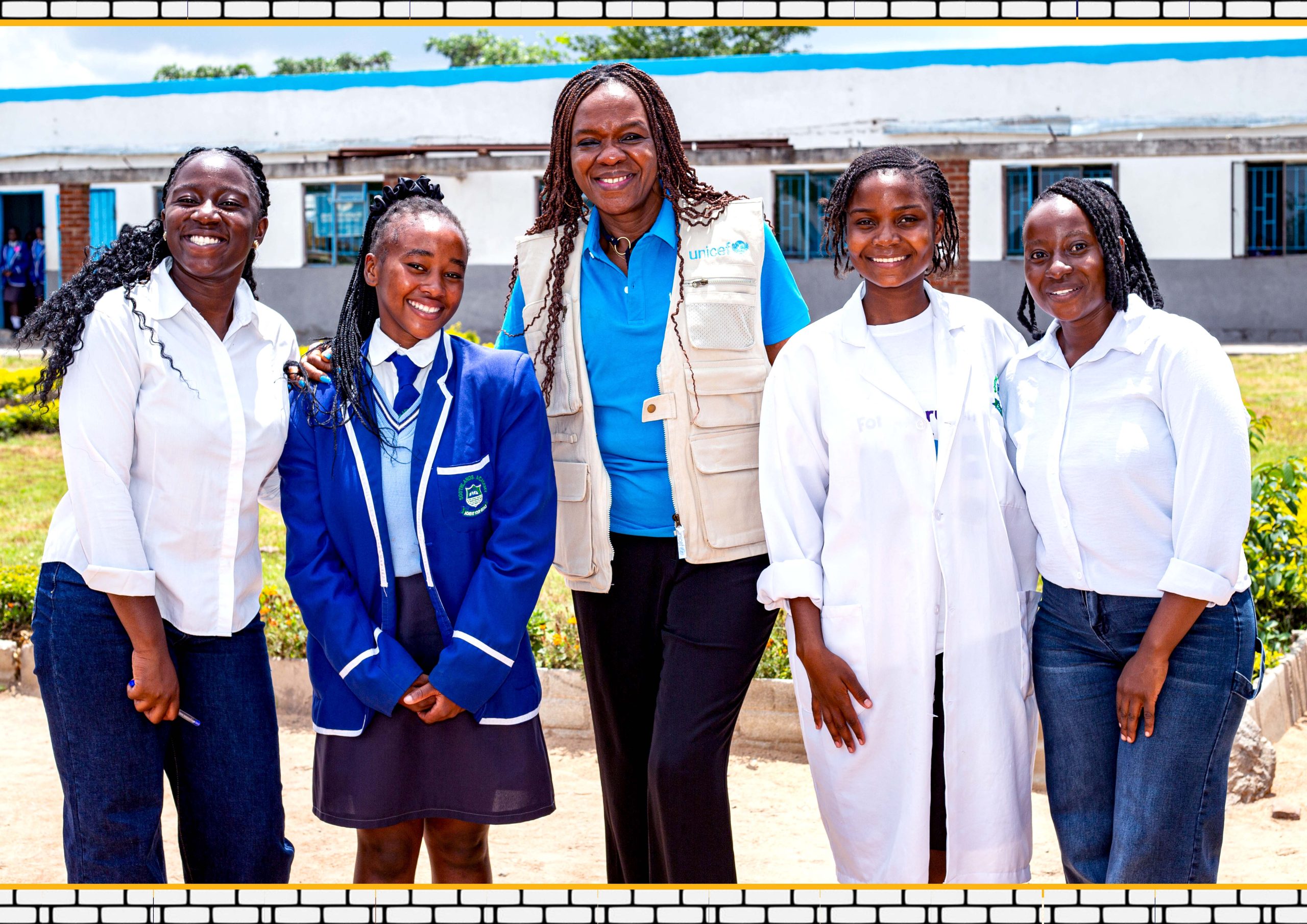
UNICEF Deputy Regional Director Visits Southlands Academy, Hopley Zimbabwe
FAWEZI actively engaged in a high-level field visit by UNICEF’s Deputy Regional Director, Alison Parker, to Southlands Academy in Harare, providing a strategic platform to showcase progress, strengthen partnerships, and amplify results under the Transforming Adolescent Girls’ Opportunities (TAGO) Project.
The visit brought together key stakeholders from government, development partners, and the education sector, reflecting a shared commitment to advancing equitable access to quality education for adolescent girls, particularly in Science, Technology, Engineering, and Mathematics (STEM).
Demonstrating Results on the Ground
At the centre of the visit was an immersive showcase of how investments in education are translating into tangible outcomes at school level. Southlands Academy, one of the TAGO-supported institutions, demonstrated progress in creating inclusive, girl-friendly, and STEM-responsive learning environments.
Learners and educators highlighted practical interventions that are improving both participation and performance, including:
Increased engagement of girls in STEM subjects
Integration of gender-responsive teaching approaches
Strengthened guidance and counselling support systems
Improved awareness of sexual and reproductive health and rights (SRHR)
Through interactive exhibitions and learner-led presentations, students shared firsthand experiences of how the programme is transforming their educational journeys—building confidence, aspiration, and a sense of agency.
Elevating Girls’ Voices and Leadership
A key highlight of the visit was the opportunity for adolescent girls to directly engage with Alison Parker, sharing their stories, challenges, and aspirations. These interactions underscored the importance of centering girls’ voices in programme design and implementation.
Students spoke about the barriers they continue to face—including financial constraints, social norms, and limited access to opportunities—while also demonstrating how targeted interventions are helping them overcome these challenges.
Their testimonies provided powerful, evidence-based insights into the impact of the TAGO Project, reinforcing the need for sustained investment in girls’ education.
Strengthening Partnerships for Greater Impact
FAWEZI’s active participation in the visit highlighted its role as a key implementing partner in delivering results at scale. The engagement created space for strategic dialogue on how to:
Scale successful interventions across more schools
Strengthen integration of STEM and life skills education
Enhance safeguarding and psychosocial support systems
Improve coordination between schools, communities, and service providers
The visit also reinforced the importance of multi-sectoral collaboration, bringing together education, health, and protection stakeholders to address the complex challenges affecting adolescent girls.
Reinforcing Commitment to Inclusive Education
In her engagements, Alison Parker reaffirmed UNICEF’s commitment to supporting initiatives that promote inclusive, equitable, and quality education for all children.
The visit underscored the critical role of partnerships in achieving these goals, highlighting how collaboration between FAWEZI, UNICEF, government institutions, and schools is driving meaningful change.
Menard