- +263 242 307793 | 0785 541 612
- info@fawezi.org
- Kenyan Embassy 95 Parklane, 1st Floor, Northwing, Harare


News Details
- July 13, 2026
- 6 views
- 0
Transforming Education and Empowerment: The Resilient Innovative Skilled and Empowered Adolescent Girls (RISE) Project Programmatic Visit
The Forum for African Women Educationalists Zimbabwe (FAWEZI), in partnership with UNICEF Zimbabwe, recently commenced a comprehensive RISE (Resilient, Innovative, Skilled and Empowered) Programmatic Visit across the Chipinge and Chitungwiza districts. Spanning a combined total of five wards and 30 project schools, this joint initiative was designed to review, monitor, and accelerate the incredible impacts achieved under the RISE project.
In Chipinge the visit kicked off with a multi-stakeholder courtesy meeting led by the District Development Coordinator’s Office (DDC), bringing together a robust “whole-of-government” team. This collaborative approach included vital insights and participation from the Ministry of Primary and Secondary Education (MoPSE), the Department of Social Development (DSD), the Zimbabwe Republic Police (ZRP) Victim Friendly Unit (VFU), the Ministry of Youth, Empowerment, Development and Vocational Training (MYEDVT), the Ministry of Women Affairs, Community, Small and Medium Enterprises (MWACSMED), the Ministry of Health and Child Care (MoHCC), and the National AIDS Council (NAC). Together, these partners are working to create safer, more inclusive environments to help adolescent girls and youth thrive.
Key Project Successes at a Glance
The collective efforts under the RISE project have yielded transformative results across education, health, and child protection:
Education and Retention: A total of 102 learners (67 females and 35 males) have been successfully re-admitted back into schools as of January 2026.
Protection and Empowerment: Stronger anonymous abuse reporting structures have been built within communities and schools, alongside the successful training of 42 adolescent girls and young mothers in vocational skills.
Health and Nutrition: Functional school nutritional gardens are active across project schools, enhancing learner health and providing climate-smart farming skills.
Progress by the Numbers: School Impact Overview
| School Name | District | Key Academic & Enrollment Impacts |
| Rimai Secondary | Chipinge | Pass rate increased from 24.7% (2024) to 42% (2025). |
| Chisuma Secondary | Chipinge | Pass rate increased from 12.3% (2024) to 20.8% (2025); 33 girls readmitted. |
| Mahenye Primary | Chipinge | Strong academic outcomes with girls consistently outperforming boys over two years. |
| Seke 5 High | Chitungwiza | Increased readmissions and retention of vulnerable girls. |
Field Insights: Chipinge District Engagements
In Chipinge District, the programmatic visit showcased how the RISE project is transforming education, child protection, and STEM learning at the grassroots level.
Rimai Secondary School (Ward 25)
At Rimai Secondary School, the delegation witnessed the transformative impact of the project on learners and the wider community. Through the RISE project’s persistent advocacy and community sensitization efforts, two girls who had dropped out of school due to child marriage and financial challenges have been successfully re-admitted to continue their education.
The delegation also observed an inspiring Tuseme and Youth Advocacy session. Through this initiative, learners are building the confidence to speak out on social issues, mentor their peers, and champion safe, inclusive, and STEM-responsive environments right in their community.
Chisuma Secondary School
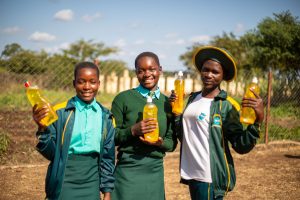
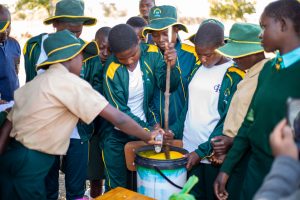
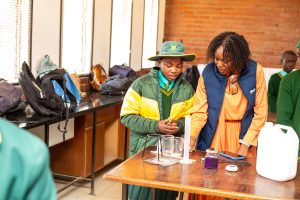
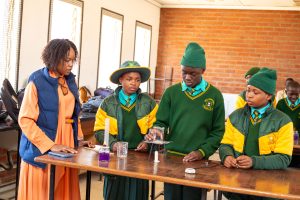
At Chisuma Secondary School, delegates monitored live lesson delivery following specialized teacher training in Gender Responsive Pedagogy. Moving from theory to practice, learners proudly showcased their innovation through STEM-related projects, including a practical detergent-making demonstration.
The school also highlighted impressive gains in access to education, with 33 previously out-of-school girls successfully readmitted to continue their education. Highlighting the spirit of the visit, school representatives shared a powerful reminder of the work ahead:
“Let us continue working together to inspire, support, and empower every learner, ensuring that no girl is left behind in the pursuit of quality education and excellence.”
Mahenye Primary School
Delegates engaged directly with School Development Committee members, Village Heads, Community Childcare Workers (CCWs), and learners involved in Tuseme, Youth Advocacy, STEM, and Child Protection Committees. The visit featured an interactive question-and-answer session on lessons from Youth Advocacy Guide training, monitoring of Gender Responsive Pedagogy implementation, and a tour of the school’s nutritional garden.
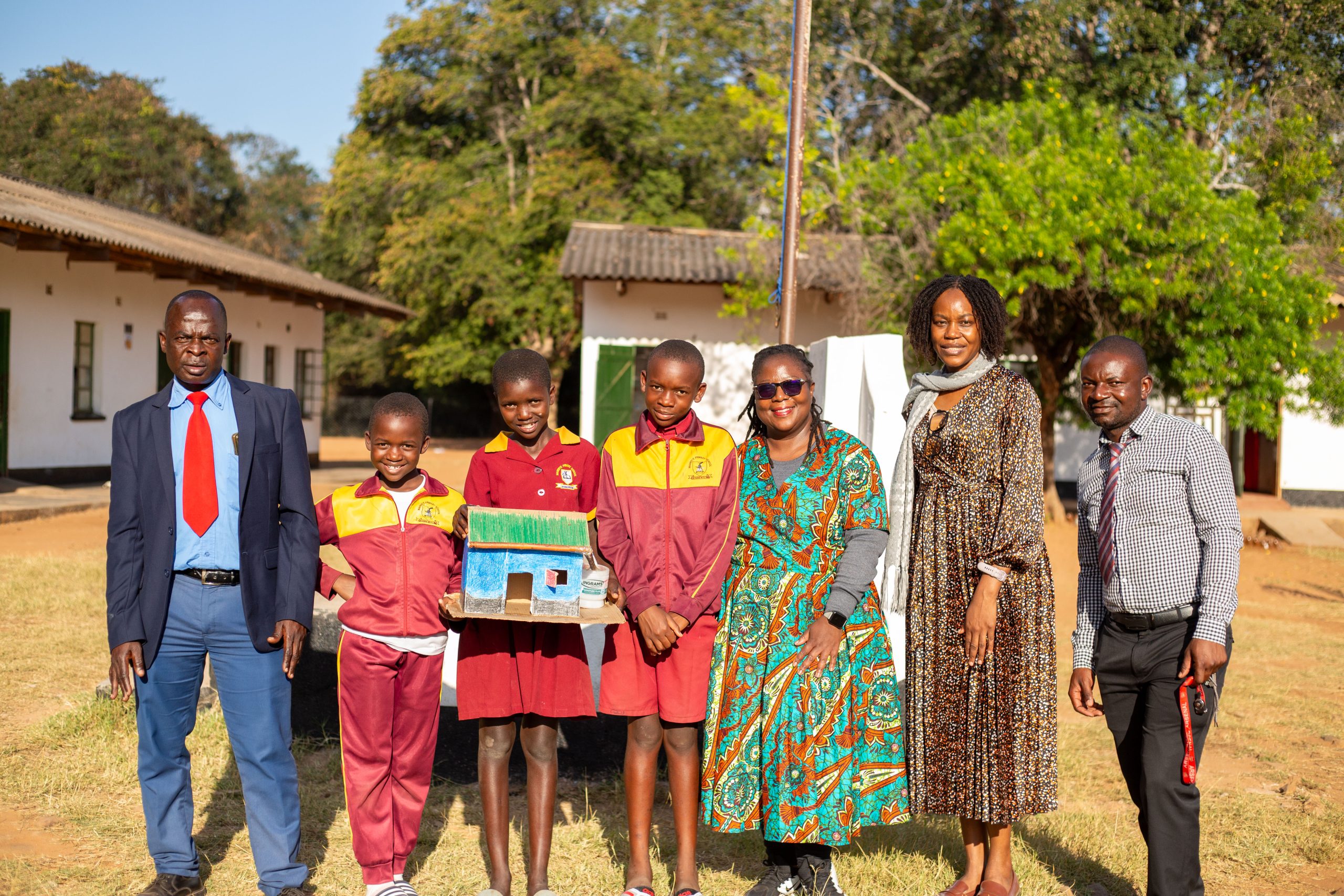
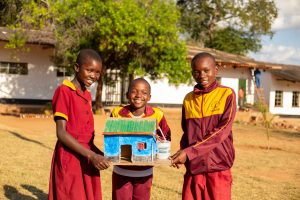
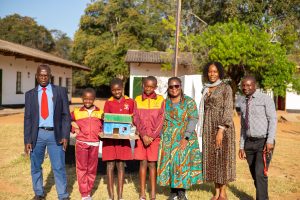
The school’s STEM Club also stood out by demonstrating an innovative roof-water harvesting model they developed. While the garden tour revealed that a malfunctioning water pump is currently limiting full production capacity, community collaboration remains high. To further secure the learning environment, the school recently completed a perimeter fence to protect learners from wildlife and unauthorized intruders.
Field Insights: Chitungwiza District Engagements
The programmatic visit transitioned to Chitungwiza District, starting with an essential stakeholder engagement meeting that brought together Government ministries, UNICEF, FAWEZI, and district partners to reflect on progress, strengthen collaboration, and reaffirm a shared commitment to advancing education and health.
Seke 3 High School
At Seke 3 High School, the delegation toured the school’s active nutritional garden, which is complemented by a greenhouse facility. They observed a STEM lesson in progress and engaged with Community Child Care Workers and out-of-school adolescent girls. This visit highlighted how the RISE Project is successfully strengthening practical learning, learner wellbeing, and community support systems.

Furthermore, following a comprehensive safety audit, the school recently constructed an incinerator and a dedicated sanitary waste disposal pit to directly improve menstrual hygiene management for girls.
Seke 5 High School
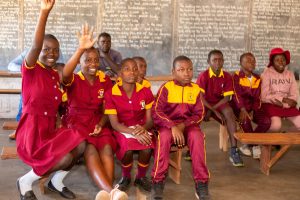
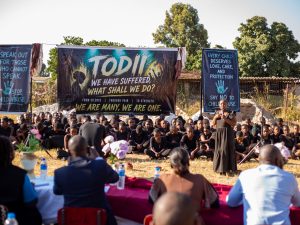
Delegates concluded by observing a vibrant Tuseme Club session, where learners confidently demonstrated leadership and advocacy skills while championing girls’ education, child protection, and gender equality. The school’s club recently utilized drama and poetry at the Giamari Festival to raise awareness on these crucial issues. The visit beautifully showcased how youth-led platforms are empowering adolescent girls to find their voices, remain in school, and become agents of positive change:
“Through the club, learners—especially girls—have gained confidence to identify challenges affecting them and to propose solutions that promote positive change within the school and community.”
These multi-district engagements reaffirm the power of deliberate partnership in building resilient, innovative, skilled, and empowered adolescents through gender-responsive education.
Menard Ziko