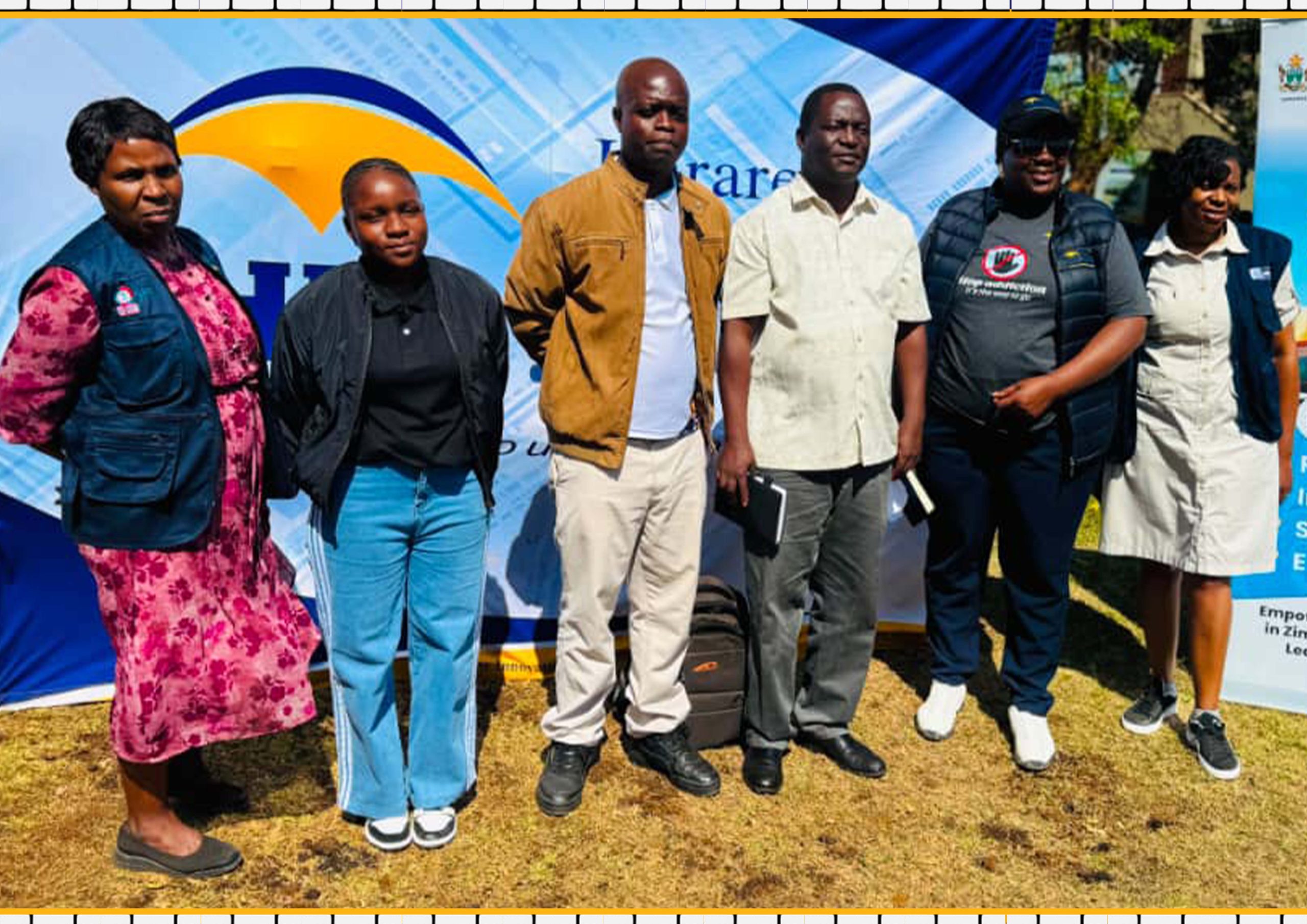
Promoting Safe and Dignified Learning Environments for First-Year Students
The Forum for African Women Educationalists Zimbabwe (FAWEZI), in collaboration with the Harare Institute of Technology (HIT) Student Affairs Division and UNESCO, facilitated a safeguarding session during HIT’s first-year student orientation, equipping students with knowledge and practical skills to recognise, prevent and report abuse and exploitation.
The session reached 150 first-year students, comprising 66 females and 84 males, across two separate groups, reinforcing the importance of safeguarding and shared responsibility in creating safe, inclusive and dignified higher education environments.
Building Awareness and Strengthening Safeguarding Skills The session focused on safeguarding, campus risk mapping, life skills and safe, confidential reporting mechanisms for cases of abuse and exploitation. Through these discussions, students were equipped to identify potential safeguarding risks within their campus environment, understand available reporting pathways and make informed decisions about their safety and well-being.
Campus risk mapping also encouraged students to reflect on spaces and situations where they may be vulnerable, highlighting the importance of awareness, prevention and collective action in addressing safeguarding concerns.
Empowering Students to Speak Out Beyond raising awareness, the session sought to strengthen students’ agency and confidence to speak out against abuse and exploitation. By increasing their understanding of safeguarding risks and confidential reporting mechanisms, the engagement encouraged students to seek support when needed and contribute to a campus culture where concerns can be raised safely and appropriately.
The inclusion of both female and male students reinforced the need for all members of the higher education community to play an active role in preventing abuse, promoting respect and upholding the dignity and rights of others.
Advancing Safe and Inclusive Higher Education The collaboration between FAWEZI, HIT’s Student Affairs Division and UNESCO highlighted the importance of integrating safeguarding into student orientation and institutional support systems. Equipping students with this knowledge from the beginning of their higher education journey helps establish a foundation for safer learning experiences and more responsive campus environments.
Through continued collaboration and capacity strengthening, FAWEZI remains committed to promoting safeguarding, preventing gender-based violence and supporting higher education institutions to create environments where every student can learn, participate and thrive with dignity and security.
Menard Ziko