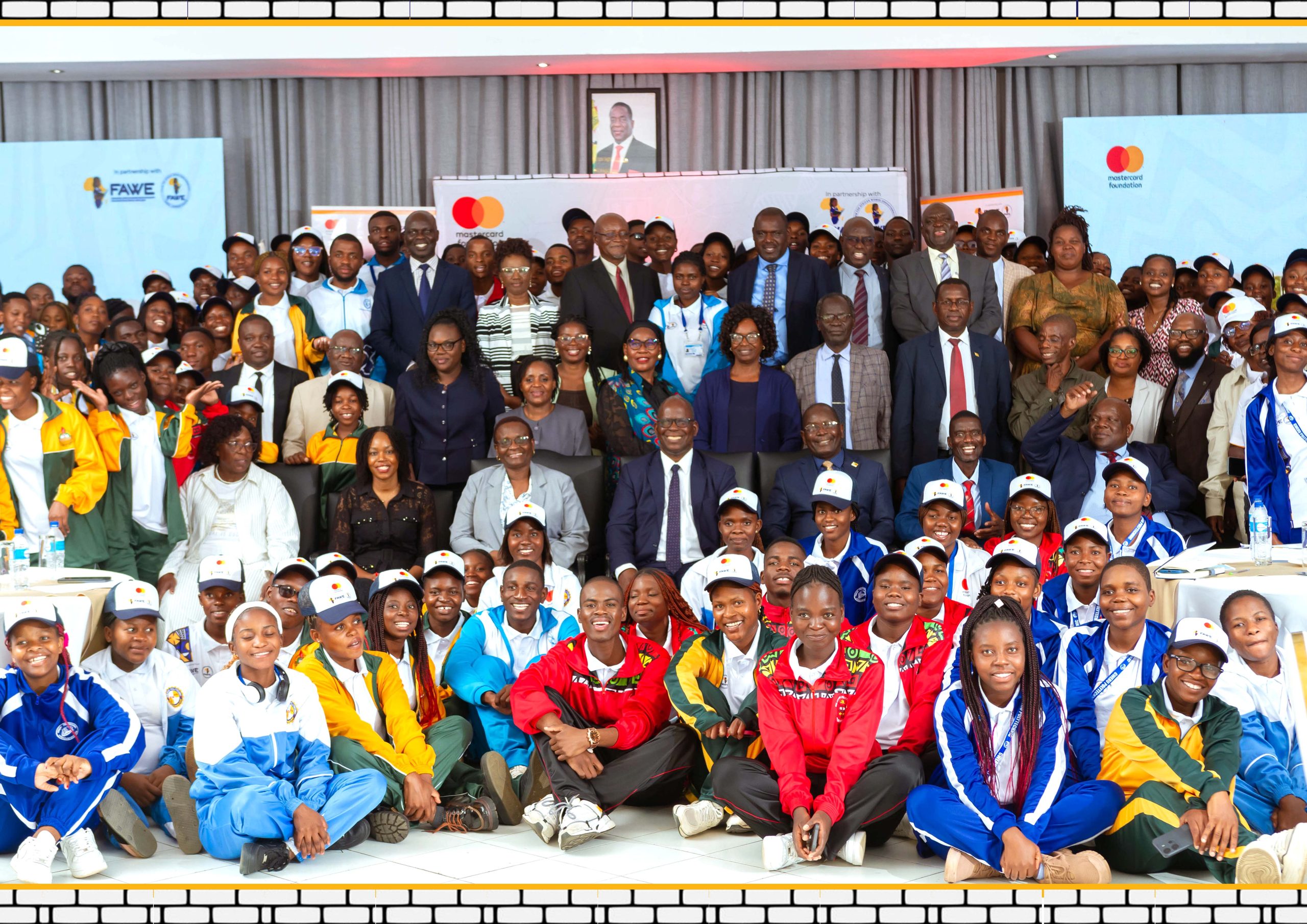
FAWEZI Joins High-Level Zimbabwe Delegation in Kampala for STEM Bridging Programme Benchmarking Visit
KAMPALA, Uganda – Zimbabwe has taken a significant step towards expanding access to higher education and STEM opportunities through a high-level benchmarking visit to Uganda aimed at informing the development of a Science Foundation Programme (SFP), a proposed bridging pathway designed to support students who are unable to access university through traditional entry routes.
The delegation, led by the Permanent Secretary in the Ministry of Higher and Tertiary Education, Innovation, Science and Technology Development, Professor Fanuel Tagwira, brought together senior government officials, higher education regulators, and university leaders and representatives from the Forum for African Women Educationalists Zimbabwe (FAWEZI). Their mission was clear: to learn from FAWE’s successful Higher Education Access Certificate (HEAC) programme in Uganda and explore how the model could be adapted to Zimbabwe’s context.
FAWEZI was represented by Executive Director Lydia Madyirapanze and Monitoring and Evaluation Head Edmond Shoniwa, while the visit was hosted by FAWE Uganda, strengthened by the presence and leadership of FAWE Africa Executive Director, Dr. Martha Muhwezi, and the Deputy Executive Director, Teresa Omondi-Adeitan underscoring the continental commitment to advancing equitable access to STEM education.
A National Effort to Build Inclusive STEM Pathways
The benchmarking visit united key stakeholders from Zimbabwe’s higher education ecosystem, including officials from the Zimbabwe Council for Higher Education (ZIMCHE), deans from select universities, registrars, policymakers and education experts. The delegation’s composition reflected Zimbabwe’s determination to develop a national framework capable of widening participation in STEM-related higher education programmes.
The visit comes at a time when many academically capable young people across Africa continue to face barriers to university education due to financial constraints, limited opportunities, educational disruptions, alternative educational backgrounds or narrowly missing conventional entry requirements.
Piloted in 2017 and formally accredited in 2019, HEAC is recognized as a fourth pathway into university education. The programme was specifically designed to support students from vocational backgrounds, foreign education systems and learners who demonstrate academic potential but fall short of standard university admission requirements.
At the center of the benchmarking mission was a desire to understand how HEAC has achieved measurable success in expanding access to higher education.
According to Professor Paul Waako, Vice Chancellor of Busitema University, one of the pioneering HEAC institutions,
“By far the biggest innovation in higher education in Uganda.”
The programme’s impact has been substantial. During engagements, the Zimbabwean delegation learned that the initial HEAC pilot involved three partner universities and supported 60 pioneer students through academic preparation, mentorship and scholarship support.
The delegation also learned that HEAC has continued to grow and has become an important mechanism for increasing university participation among disadvantaged learners, particularly girls and other underrepresented groups.
Speaking about the programme’s performance, Uganda’s National Council for Higher Education Executive Director, Professor Mary Okwakol said,
“Students who went through the HEAC programme, when they joined other programmes, performed as well as other students, and sometimes even better.”
She further revealed that some HEAC graduates had achieved cumulative grade point averages above 4.0, demonstrating the effectiveness of the model in preparing students for rigorous university study.
For Zimbabwe, the benchmarking exercise was not simply about studying another country’s education programme. It was about identifying practical solutions that align with national development priorities and the country’s commitment to inclusive education.
Professor Tagwira emphasized this objective throughout the visit,
“The purpose of our visit is to do benchmarking, learning from the Ugandan experience in terms of how they have been able to support students from disadvantaged communities to access higher education through the Higher Education Access Programme.”
The statement resonated strongly with the delegation’s broader vision of ensuring that economic circumstances do not define a young person’s educational future.
The visit reinforced Zimbabwe’s national aspiration of”leaving no one and no place behind”, particularly in STEM education where access remains uneven for girls, rural learners, refugees, persons with disabilities and students from low-income households.
One of the most impactful moments of the visit came when the delegation engaged directly with students at the Islamic University in Uganda and Busitema University.
Rather than focusing solely on policy frameworks and regulatory systems, the meetings provided an opportunity to hear firsthand accounts from young women and men whose educational journeys had been transformed through HEAC.
These students represented a powerful reminder that missing university entry requirements does not necessarily reflect a lack of ability. In many cases, structural barriers, economic hardship and unequal educational opportunities stand between talented young people and higher education.
Through HEAC, those students found a second chance.
As the delegation observed, they were no longer students excluded from opportunity. They were learners thriving in university environments, pursuing careers and redefining what was possible for themselves and their communities.
This experience reinforced the case for Zimbabwe’s proposed Science Foundation Programme, which seeks to create similar opportunities for capable young women and men who would otherwise be excluded from tertiary education.
FAWE Africa and FAWE Uganda played a central role in demonstrating how targeted interventions can transform access to higher education.
Dr. Martha Muhwezi, Executive Director of FAWE Africa, noted that the benchmarking visit offered FAWEZI an opportunity to learn from a model that has successfully provided academically gifted students from disadvantaged communities with a second chance to access university education and pursue programmes of their choice.
Meanwhile, FAWE Uganda Executive Director Susan Opok Tumusiime highlighted the scale of the programme’s impact, revealing that,
HEAC has supported over 700 students, “most of them girls,” since its launch.
She further emphasized that the programme’s success extends beyond academic bridging and is strengthened by mentorship structures and FAWE models such as Tuseme, which help young people overcome social and educational challenges as they transition into university education.
These lessons are particularly relevant for Zimbabwe as it considers how to design a programme that not only increases access, but also supports retention, academic success and graduate employability.
The visit concluded with an engagement at Uganda’s Ministry of Education and Sports, where the delegation met Hon. John Chrysostom Muyingo, Minister of State for Higher Education.
At the end of the learning journey, one message had emerged consistently from policymakers, regulators, university leaders and students,
“Potential should never be limited by circumstance.”
The benchmarking exercise provided Zimbabwe with practical lessons on programme design, accreditation processes, quality assurance mechanisms, student support systems and institutional partnerships necessary for implementing a successful STEM bridging pathway.
Most importantly, the visit strengthened Zimbabwe’s resolve to develop its own Science Foundation Programme capable of creating inclusive, scalable and sustainable pathways into higher education.
As Zimbabwe moves towards finalizing, accrediting and piloting the Science Foundation Programme, the Uganda experience offers a compelling example of how African-led solutions can address educational exclusion, increase STEM participation and unlock opportunities for thousands of young women and men.
The benchmarking visit was therefore more than a study tour. It was a glimpse into what is possible when education systems are intentionally designed to recognize talent, remove barriers and ensure that every young person has a fair opportunity to succeed.
Menard Ziko