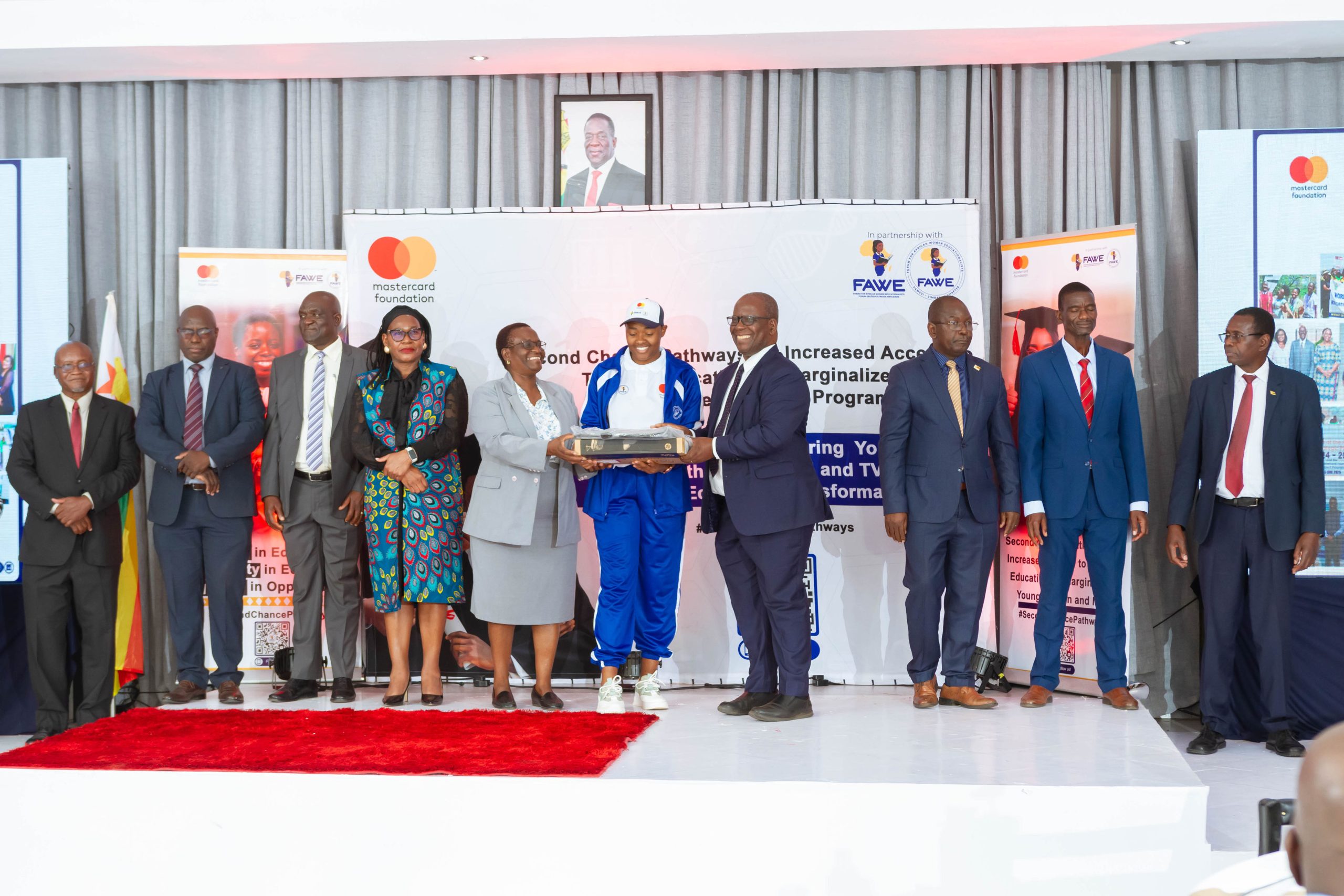
FAWEZI Hands Over Laptops to 192 Zimbabwe TVET Bursary Programme Participants, Strengthening Digital Access and Inclusive STEM Education
HARARE, Zimbabwe – The Forum for African Women Educationalists Zimbabwe (FAWEZI), in partnership with the Ministry of Higher and Tertiary Education, Innovation, Science and Technology Development (MHTEISTD), and with support from FAWE and the Mastercard Foundation, has handed over laptops to 192 participants under the Zimbabwe TVET Bursary Programme Cohort 1, marking a significant milestone in advancing digital inclusion and equitable access to tertiary education.
The 192 programme participants (152 females and 40 males) are enrolled across six institutions: Harare, Bulawayo, Gweru, Kwekwe, Mutare Poltechnics and Belvedere Technical Teachers College, where they are pursuing Science, Technology, Engineering and Mathematics (STEM)-related programmes.
Notably, the cohort includes 10 persons with disabilities (six females and four males) and 13 refugees (4 females and 9 males), reflecting FAWEZI’s commitment to ensuring that access to quality education extends to those who have traditionally faced barriers to higher learning.
The handover ceremony brought together senior government officials, development partners and institutional representatives, underscoring the collective commitment towards creating inclusive pathways to higher education.
The Honourable Minister of Higher and Tertiary Education, Innovation, Science and Technology Development, Ambassador Dr. Fredrick M. Shava, was ably represented by Permanent Secretary Professor Fanuel Tagwira. Also in attendance were the Deputy Minister of Public Service, Labour and Social Welfare, Honourable Mercy Dinha; MHTEISTD Acting Permanent Secretary Professor Norman Takaidza; Director Tertiary Education Programmes Mr. D.C. Damba; Director Registration and Accreditation at the Zimbabwe Council for Higher Education (ZIMCHE), Dr. C. Mandizvidza; and representatives from the Tertiary Education Services Council.
The event was also attended by Vice Chancellors from partner universities, principals and representatives of Technical and Vocational Education and Training (TVET) institutions, development partners, and the FAWEZI Executive Committee led by Chairperson Professor Ruth Gora alongside the FAWEZI Secretariat headed by Executive Director Ms. Lydia Madyirapanze.
The ceremony represented much more than the distribution of digital devices. It symbolized investment in the future of young Zimbabweans who are pursuing technical and vocational training in fields critical to national development.
Speaking during the event, Professor Fanuel Tagwira emphasized the broader significance of the initiative.
“This is more than a ceremonial event. It demonstrates a shared commitment to expanding access to quality, inclusive and technology-enabled education, especially for those from marginalised backgrounds.”
His remarks reflected the critical role technology now plays in education, particularly as institutions increasingly adopt digital learning methods and online academic resources.
Professor Tagwira further noted,
“In this era driven by artificial intelligence and rapid technological advancement, access to laptops is no longer a luxury but a necessity. These devices are gateways to knowledge, innovation and opportunity.”
The statement aligns with Zimbabwe’s broader vision of building a digitally empowered education sector capable of producing graduates equipped for the demands of the Fourth Industrial Revolution.
FAWEZI Executive Committee Chairperson Professor Ruth Gora highlighted the transformative value of the laptops, stating,
“They symbolise opportunity, connectivity and empowerment. They will support academic journeys and enhance digital skills.”
For programme participants, the laptops will provide direct access to research materials, virtual learning environments, digital libraries, collaboration platforms and emerging technologies that are increasingly central to tertiary education.
The FAWE/Mastercard Foundation Phase II programme extends opportunities to persons with disabilities and refugees, groups that often encounter significant barriers in accessing tertiary education.
Deputy Minister Mercy Dinha emphasized the importance of this inclusive approach.
“These devices are more than just tools; they are instruments of empowerment that will enable learners to innovate, connect with the world and contribute meaningfully to national development.”
The laptop handover to the Zimbabwe TVET Bursary Programme Cohort 1 represents a significant step towards building a more inclusive, digitally connected and equitable tertiary education system. Through ensuring that programme participants have access to the tools necessary for success in a technology-driven learning environment.
Menard Ziko